Trusted plumbing experts serving Norman Oklahoma for over 30 years
What’s Covered on This Page
- Deciding Between a Simple Swap and a Full Fixture Installation
- Signs You Can Handle It Yourself (And When to Call a Plumber)
- Why Licensing Matters for Fixture Connections
- What Happens During a Fixture Installation Visit
- What Drives the Cost of Fixture Installation
- Can you install a garbage disposal at the same time as a new kitchen faucet?
- Do I need a permit to move a sink or add a new fixture in my Norman home?
- How long does a typical toilet or faucet swap take compared to a full installation?
- What should I do if I notice a bad smell or gurgling after installing a new fixture?
Deciding Between a Simple Swap and a Full Fixture Installation
Most people size up the job by looking at the new fixture. That makes sense, but it’s the wrong place to look.
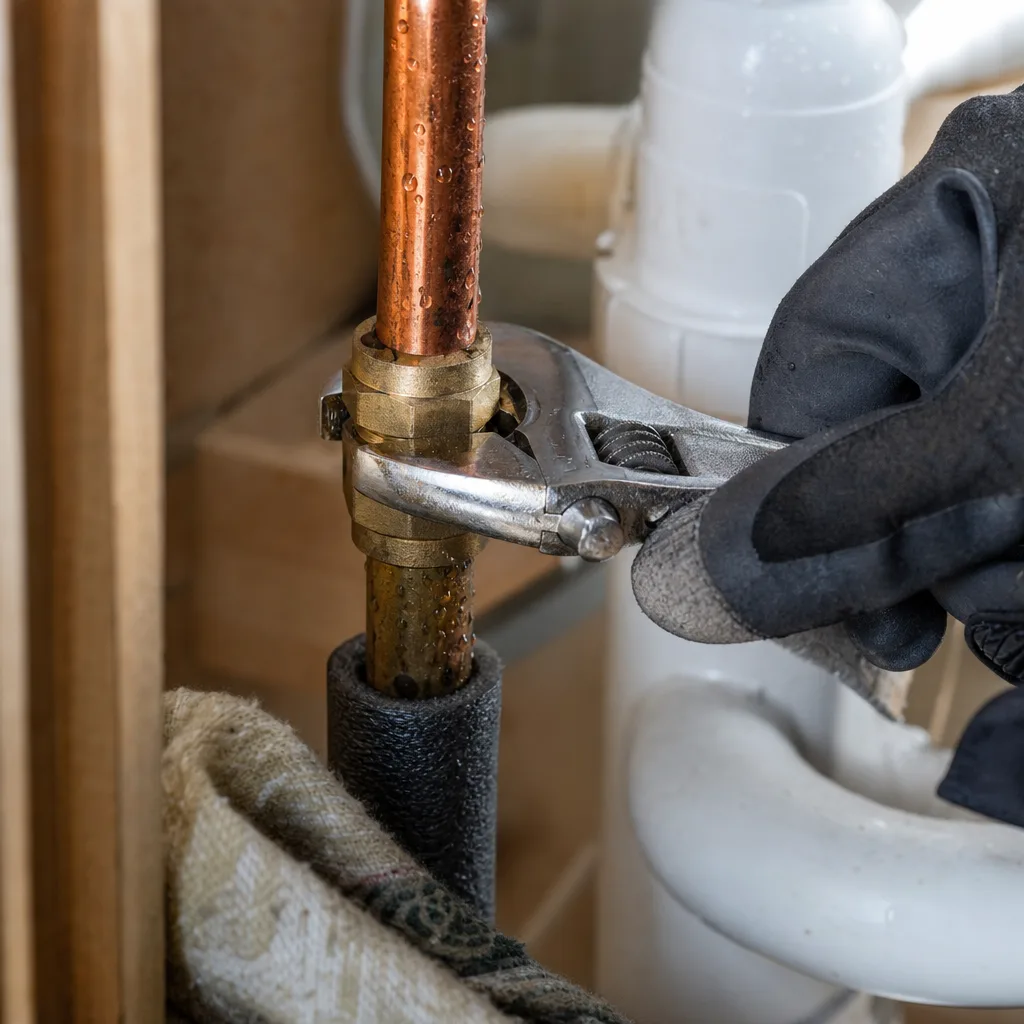
The real question is whether the new piece can drop right into the old one’s place. If it can, you’re looking at a swap. If it can’t, the job grows.
You’re probably looking at a simple swap when:
- The new faucet fits the same holes in your sink or counter.
- The new toilet matches the old one’s distance from the wall to the drain.
- Your shutoff valves turn easily and fully stop the water.
- The supply lines and drain parts look clean, with no rust, drips, or crusty buildup.
- Nothing is moving to a new spot.
If all of that is true, a faucet or toilet swap is often a job a handy homeowner can do. We’d rather tell you that straight than sell you a visit you don’t need.
It turns into a full installation when something doesn’t line up. Here are the common signs:
- You’re moving a sink, toilet, or tub to a new spot in the room.
- The new fixture is a different size or shape than the old one, like a bigger vanity or a freestanding tub.
- A shutoff valve won’t turn, or it turns but the water keeps trickling.
- The floor around the toilet feels soft or spongy.
- Pipes under the sink are green, rusty, or patched with tape.
- You’re adding a fixture where there wasn’t one before, like during a remodel.
Here’s a common one. You pull the old toilet and the floor under it is dark and soft. That’s not a toilet problem anymore. Water has been getting into the floor, and setting a new toilet on top of it just hides the damage.
Another one is the stuck shutoff valve. It looks fine until you try to turn it and it won’t budge, or it snaps. Now the water has to be shut off for the whole house before anything else can happen.
Shower and tub swaps are trickier than they look. A new trim kit or handle often won’t fit the valve that’s already in the wall. When they don’t match, the wall has to be opened to change the valve.
None of this means you should panic. It just means the price and time of a job depend on what we find once the old fixture comes out, not on the new one you picked.
That’s why it helps to have someone look before you buy, or at least before you start pulling things apart. A quick check of your valves, lines, and floor tells you if you’re doing an afternoon swap or a bigger project.
Not sure which side you’re on? That’s what our free estimate is for. We’ll look at what’s there and tell you if it’s a swap you can handle or a job for our licensed, bonded plumbers.
Signs You Can Handle It Yourself (And When to Call a Plumber)
Even a true swap still comes down to you. The job can be simple, but you have to be ready for it.
You’re in good shape to do it yourself if most of these sound like you:
- You know where your home’s main water shutoff is, and you’ve turned it before.
- You have the basic tools, like an adjustable wrench, a basin wrench for tight spots under the sink, and thread tape.
- The instructions in the box match what you see under your sink or behind your toilet.
- You have a second bathroom or sink, so it’s fine if the job takes longer than you planned.
- You’re okay making a second trip to the hardware store for a part you didn’t know you needed.
That last one matters more than people think. A lot of DIY fixture jobs go fine. They just take three times longer than the video made it look.
Some jobs start out easy and then change halfway through. Here’s when to put the wrench down:
- A connection still drips after you’ve tightened it and redone it a couple of times.
- You have to force a part to make it fit.
- An old nut or bolt is rusted on and starts to strip or round off.
- A pipe cracks, bends, or breaks when you touch it.
- You find out the job means cutting into a pipe or changing how it connects.
Stopping early is the smart move here. A small mistake under a sink is easy to fix. A mistake that’s been pushed through until it “seems fine” is a lot harder.
Watch out for the slow drip. A fast leak gets your attention right away. A tiny one inside a cabinet or under a toilet can run for weeks before you notice a stain, a smell, or a soft spot. When you finish any fixture job, check it again the next day and again a few days later with a dry paper towel.
Some jobs are worth handing off from the start, even for a handy person:
- Bathtub replacement, which often means opening walls or floors and moving heavy pieces.
- Garbage disposal installation, since it ties your drain and an electrical connection together.
- Water heater installation, which has its own page and its own set of concerns.
- Any job at a business, where a leak can shut down your day and affect your customers.
If you’ve already got water where it shouldn’t be and can’t tell where it’s coming from, that’s a different problem. Our leak detection service is built for that.
No one should feel bad about calling a plumber for a fixture job. You’re paying for it to go in right the first time, with no surprises a week later. Our licensed, bonded plumbers handle faucets, toilets, tubs, and kitchen and bathroom fixtures every day for homes and businesses.
Why Licensing Matters for Fixture Connections
The fixture is the part you see. The connections are the part that keeps water where it belongs. That’s where licensing earns its keep.
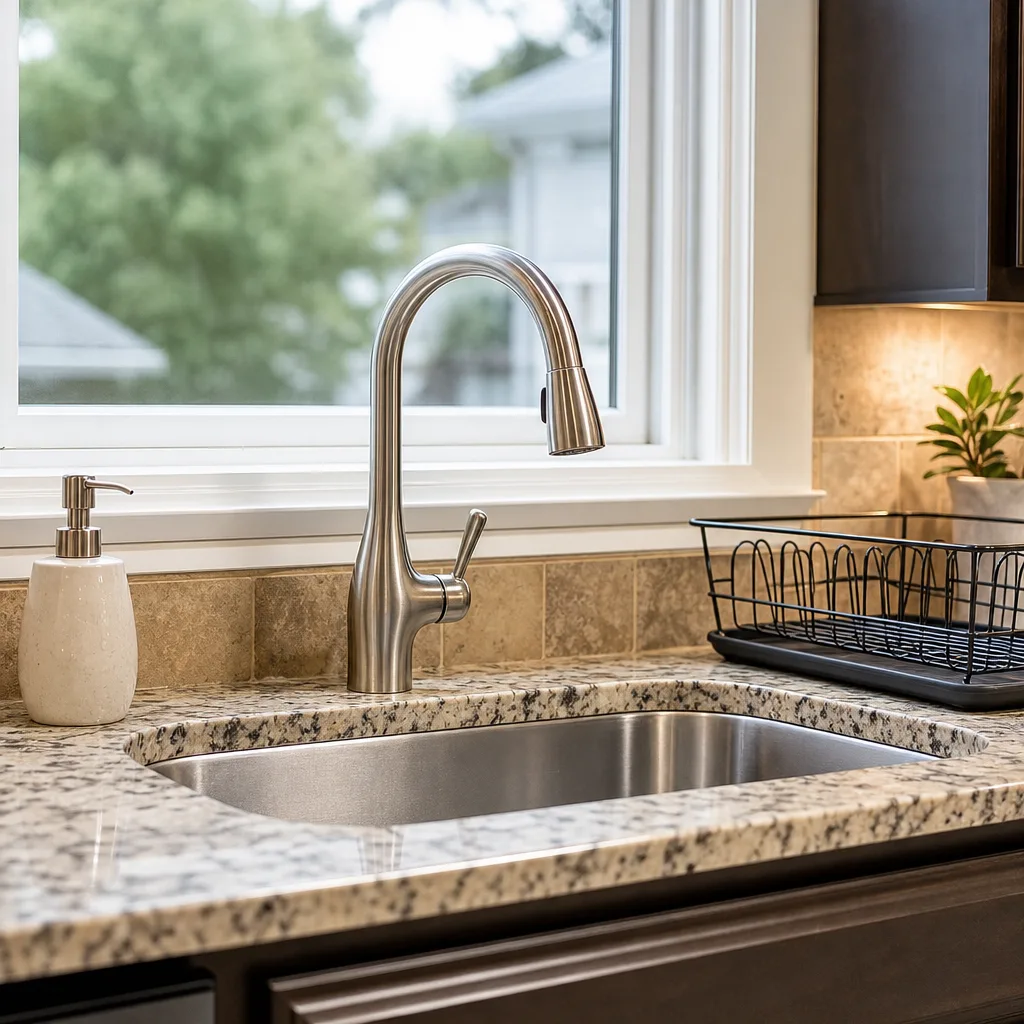
A new faucet or toilet can look perfect on day one and still be set up to fail. The trouble usually hides in what joins it to your pipes: the supply lines, the drain, the seal at the floor, and the valve in the wall.
Here’s what a trained plumber is paying attention to when a fixture goes in:
- Supply connections that are snug and sealed, without being cranked so tight they crack a fitting.
- A drain that slopes the right way, so water and waste move along instead of sitting in the pipe.
- A trap under the sink or tub that holds a little water to block sewer gas from coming into your home.
- Venting that lets the drain breathe. Without it, you can get gurgling, slow drains, or that sewer smell.
- A toilet that sits flat and seals all the way around, so it doesn’t rock and slowly leak into the floor.
None of that shows once the cabinet door closes. That’s why it’s easy to get wrong and hard to catch.
Licensing means the person doing the work has been trained and tested on how plumbing systems work together, not just how one part screws onto another. That matters most when a job changes the setup, like moving a sink, adding a fixture, or swapping a shower valve inside the wall.
Bonding is the other half. It gives you some protection if a job isn’t finished or doesn’t meet the terms you agreed to. You hope you never need it, but it’s good to know it’s there.
This matters even more for a business. A slow leak in a restroom or break room can close that room, damage stock or flooring, and leave customers with a bad impression. Getting the connections right the first time costs far less than fixing the damage later.
Before you hire anyone for a fixture job, ask a few plain questions:
- Are you licensed and bonded?
- Will you look at my shutoffs, lines, and drain before giving me a price?
- If the job grows once the old fixture comes out, how will you tell me before doing more work?
- Does moving or adding this fixture need a permit, and who handles it?
A good plumber won’t mind any of these questions. If someone dodges them, that tells you something.
Our plumbers at Brandon’s Plumbing are licensed and bonded. We bring more than 30 years of experience to homes and businesses across Norman and the greater Oklahoma City area. We’ve built that on honest pricing and dependable work, and we’re proud of our A+ BBB rating.
Thinking about Plumbing Fixture Installation? Let’s talk.
Call for an estimate. Brandon’s Plumbing is ready to help.
What Happens During a Fixture Installation Visit
Knowing what a good fixture installation looks like helps you feel ready for the day. It also helps you tell if the job was done right.
Most installs follow the same basic order, whether it’s a faucet, a toilet, or a new tub.
There are a few easy things you can do before the plumber shows up:
- Clear out the cabinet under the sink, or the space around the toilet or tub.
- Leave a clear path from the door to the room.
- Keep the new fixture in its box and nearby, with all the parts and the instructions.
- Know where your main water shutoff is, in case the valve at the fixture won’t do the job.
- Plan to have water off in that room, and maybe the whole house, for part of the visit.
Keeping the box closed matters. A missing part or a model that doesn’t match your setup is much easier to catch before anything comes apart.
Here’s how a proper installation usually goes:
- The water gets shut off, and the lines are drained so nothing spills when they’re opened.
- The old fixture comes out.
- The plumber checks what’s now exposed, like the shutoff, the supply lines, the drain, and the floor or wall. Any problems should be pointed out to you here.
- Worn parts get replaced if needed. Old supply lines and tired shutoff valves are common ones.
- The new fixture goes in and gets connected.
- The water comes back on slowly, and everything gets tested.
Step three is the one to pay attention to. That’s the moment a simple swap can turn into a bigger job, for the reasons we covered above. A good plumber will stop, show you what they found, and talk it through before doing more work.
Testing should be more than a quick look. For a faucet, that means running hot and cold water and checking under the sink for drips. For a toilet, it means flushing a few times and checking that it fills, stops, and doesn’t rock. For a tub or shower, it means watching the water drain and checking the valve at full hot and full cold.
Before the plumber leaves, it’s fair to ask for a few things:
- Watch the fixture run with them so you see it working.
- Find out what was replaced besides the fixture itself.
- Ask who’s taking the old fixture and packaging away.
- Ask what to look for over the next few days, and who to call if something seems off.
A straight answer to each of these is a good sign. You shouldn’t have to guess what happened in your own home.
Once it’s in, do the dry paper towel check we mentioned earlier over the next few days. Most problems that show up later give a small warning first.
If you’re in Norman or the greater Oklahoma City area and you’re ready to get a new fixture in, start with our free estimate. Our licensed, bonded plumbers will look at what you have and tell you what the job really involves before any work begins.
Watch Our Video
See How We Handle Plumbing Fixture Installation in
Brandon’s Plumbing
What Drives the Cost of Fixture Installation
The price of a fixture job isn’t set by the faucet or toilet you picked. It’s set by how much work it takes to get that fixture connected the right way. Two jobs with the same new toilet can cost very different amounts.
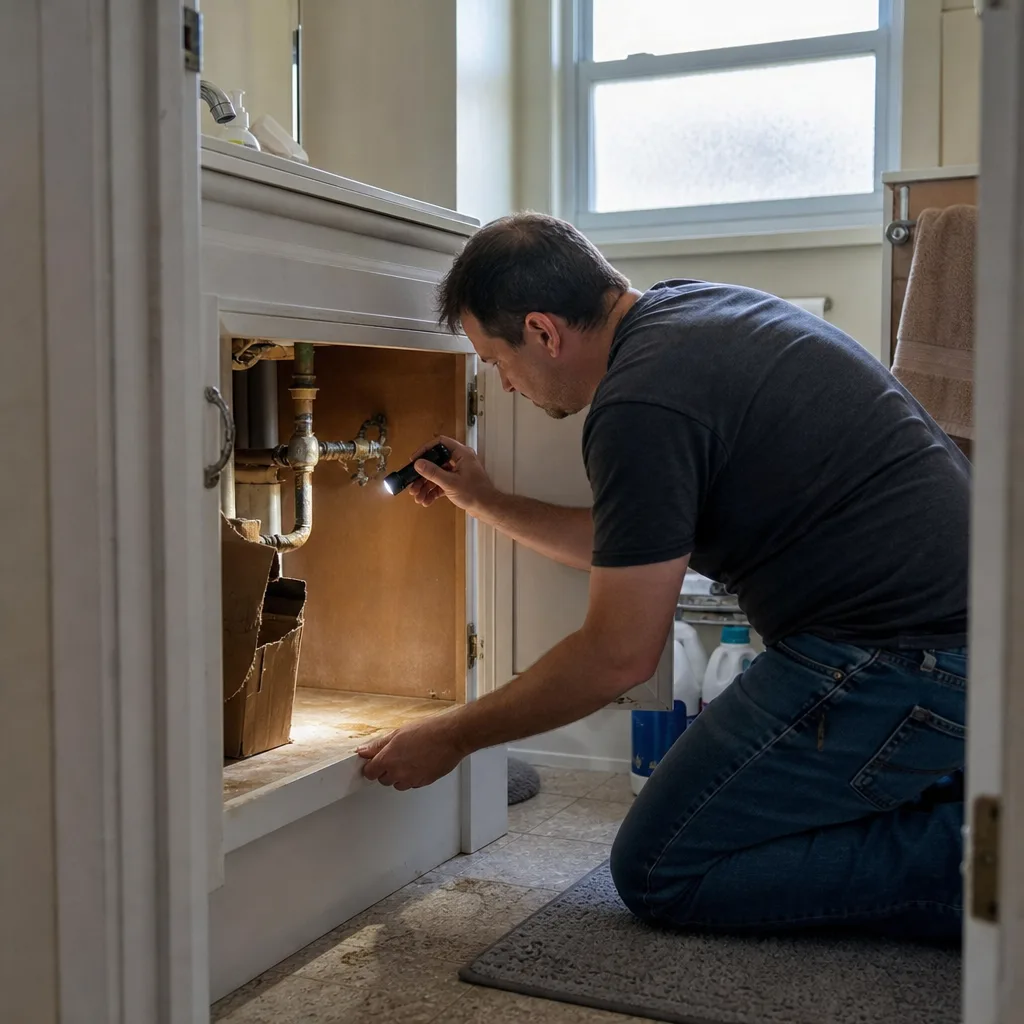
Plumbers usually price this kind of work in one of two ways. Some charge a flat price for a set job, like installing a toilet. Others charge by the hour plus parts. Either can be fair. What matters is that you know which one you’re getting and what it covers.
These are the things that tend to move the cost up or down:
- The type of fixture. A bathroom faucet is quicker than a kitchen faucet with a sprayer. A toilet is quicker than a tub.
- What’s behind the old one. Worn shutoffs, old supply lines, or a damaged floor add parts and time, for the reasons we covered above.
- Whether anything moves. Keeping a fixture in its old spot costs less than running new supply and drain lines to a new one.
- How easy it is to reach. A cramped cabinet, a second-floor bathroom, or a tub boxed in by tile all take more time.
- Wall and floor work. If a shower valve has to change or a tub comes out, the wall or floor may need to be opened.
- Who buys the fixture. Some customers buy their own. Others want the plumber to supply it. Ask how each option affects the price.
- Permits. Adding or moving a fixture can need one, which adds a fee and some scheduling time.
- Haul-away. Getting rid of an old tub or toilet is real work, so check if it’s part of the price.
The biggest swing usually comes from things nobody can see until the old fixture comes out. That’s not a trick. It’s just how plumbing works. A fair quote should tell you up front what happens if something hidden turns up.
Cheap isn’t always the bargain it looks like. Reusing an old, tired supply line to save a little money can lead to a leak inside a cabinet later. Fixing water damage costs far more than the part would have.
When you’re comparing quotes, ask these:
- Is this a flat price or an hourly rate?
- Does it include new supply lines and a new wax ring or seal, or just the labor?
- Is taking away the old fixture included?
- If you find a problem once the old fixture is out, what’s the price for fixing it?
If two quotes are far apart, the answers to these usually explain why. One plumber may be pricing just the swap, and the other may be pricing the parts your setup really needs.
We think you should know what you’re paying for before anything comes apart. That’s what honest pricing means to us, and it’s why every fixture job starts with our free estimate. We’ll look at your shutoffs, lines, and floor, then tell you what the job involves.
Frequently Asked Questions
Common questions about Plumbing Fixture Installation
Can you install a garbage disposal at the same time as a new kitchen faucet?
Yes, but plan for extra time since a disposal ties into both your drain and an electrical connection. Pairing it with a faucet swap means more parts to check, like the drain line slope and the trap, so it’s smart to have a plumber look at both before you start.
Do I need a permit to move a sink or add a new fixture in my Norman home?
Often yes, especially if you’re moving a fixture to a new spot or adding one where none existed. Permit rules and timing vary by project, so ask your plumber upfront who handles the paperwork before work begins.
How long does a typical toilet or faucet swap take compared to a full installation?
A simple swap, where the new fixture fits the old spot and connections, usually wraps up in an afternoon. A full installation takes longer because it can involve opening a wall, replacing worn shutoff valves, or fixing a soft floor found once the old fixture comes out.
What should I do if I notice a bad smell or gurgling after installing a new fixture?
That usually points to a venting problem, where the drain isn’t getting enough air to let water and waste move properly. Call a plumber to check the vent and trap rather than waiting, since this issue won’t fix itself and can get worse.