Trusted plumbing experts serving Norman Oklahoma for over 30 years
What’s Covered on This Page
- Signs Your Bathtub Needs Replacing, Not Just Repair
- When Repair Is the Smarter Call
- What Happens During a Bathtub Replacement
- The Risk of Removing a Bathtub Yourself
- How Bathtub Replacement Pricing Works
- Why do so many homeowners decide to get rid of their bathtub?
- Is it cheaper to replace a tub with another tub, or switch to a shower?
Signs Your Bathtub Needs Replacing, Not Just Repair
Most tub problems look alike at first. A crack is a crack, and a stain is a stain. What matters is whether it stops at the surface or keeps going underneath.
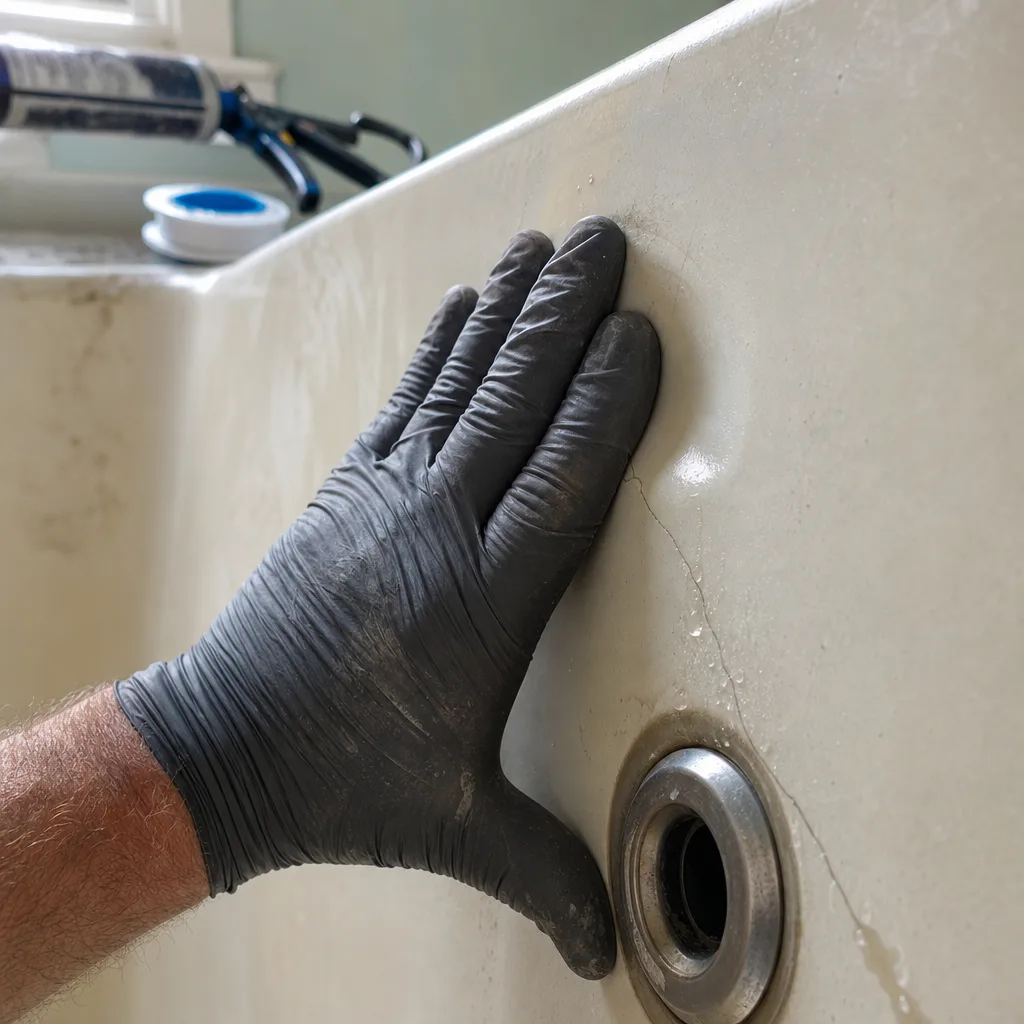
Here are the signs that point to a new tub:
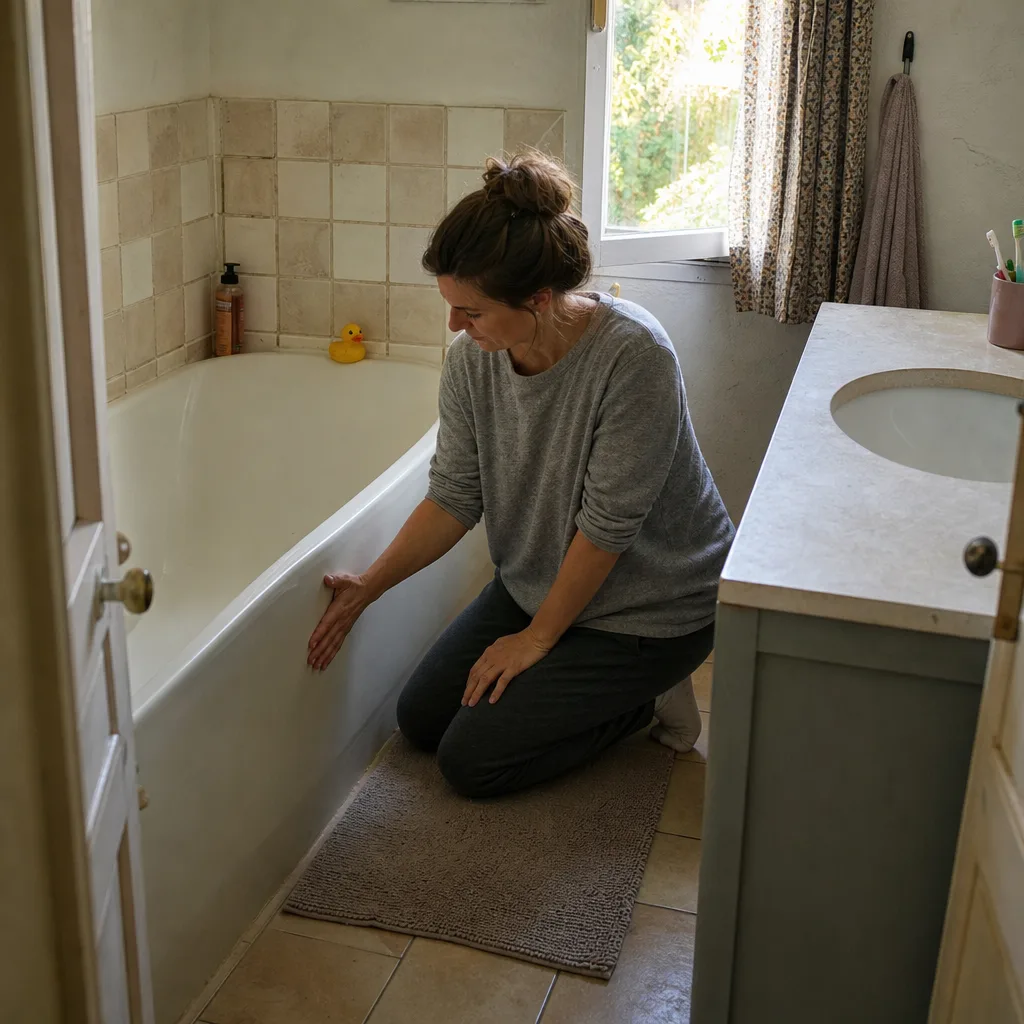
- The tub floor gives or flexes when you step in. That usually means the support under it has failed, and a patch on top won’t hold.
- Cracks keep coming back in the same spot after they’ve been fixed. The tub is moving, and it’ll keep cracking.
- You see water stains on the ceiling below, or the floor around the tub feels soft or spongy. Water is getting under the tub, and that can rot the subfloor over time.
- Rust has eaten through the finish on a steel or cast iron tub and keeps spreading. Once the metal is going, a coating won’t stop it.
- Caulk and grout keep pulling loose along the edges no matter how often you redo them. That often means the tub is shifting.
- You keep spending money on the same tub. Two or three repairs on one problem is a sign the tub itself is the problem.
- The tub just doesn’t work for you anymore. If stepping over the side is getting hard or the size is wrong for your family, a repair can’t change that.
Picture this. You notice a hairline crack near the drain. You fix it, and six months later it’s back, a little longer. Then you spot a brown ring on the ceiling right under the bathroom. That’s not a surface problem anymore. That’s water finding its way under the tub, and the longer it goes, the more you’ll pay to fix the floor too.
Now for the straight answer on the other side. A lot of tubs don’t need replacing at all.
If you’ve got a small chip, a surface stain, a dripping faucet, a slow drain, or worn caulk on a tub that feels solid when you stand in it, you probably need a repair, not a new tub. Those are smaller jobs, and some, like re-caulking, you can handle yourself on a weekend.
We’d rather tell you that than sell you a tub you don’t need. If your problem sounds more like a fix, our Bathtub Repair page covers that side of things.
Not sure which side of the line you’re on? That’s exactly what our free estimate is for. We’ll take a look, tell you whether it’s a repair or a replacement, and explain why.
One last tip. Don’t wait on the signs that involve water. A flexing floor or a stain on the ceiling below won’t fix itself, and catching it early can keep a tub job from turning into a floor job.
When Repair Is the Smarter Call
Repair is the smarter call when the tub itself is still solid and the problem has a clear, fixable cause. Before you pay to pull a tub, make sure the tub is really what’s failing.
That’s the big one. A water stain on the ceiling below looks scary, and it does mean water is getting somewhere it shouldn’t. But it doesn’t always mean the tub is done.
Sometimes the leak is coming from the drain or the overflow, the round cover under the faucet. Sometimes it’s the valve inside the wall. If we find the source and the floor under the tub is still firm, we can often fix the leak and leave the tub right where it is.
Here are a few other times we’d tell you to keep your tub:
- You have an old cast iron tub that’s sound underneath. These tubs are very heavy and built to last. Getting one out is a big job, and if the only issue is a worn finish, it’s usually worth saving.
- You love the tile around it. A built-in tub sits under the wall tile, so pulling it almost always means tearing out at least the bottom rows. If the tile can’t be matched, a small tub problem can turn into a whole new wall.
- You’re planning a full bathroom remodel in a year or two. A repair now gets you by, and you can replace the tub when the room is torn apart anyway. That way you only pay for the mess once.
- The problem is the faucet or the drain. A drip or a slow drain is a fixture or pipe issue, not a tub issue. A new tub won’t fix it.
Cost is part of this too. A tub repair is usually a smaller, quicker job. A replacement can grow once the old tub comes out and we see the floor, the pipes, and the wall behind it. That’s not a reason to put off a tub that truly needs replacing. It is a good reason not to replace one that doesn’t.
Whoever looks at your tub, ask them these questions before you agree to anything:
- What’s causing the problem?
- Will a repair hold, or will it come back?
- What happens to the tile and floor if the tub comes out?
- Is the floor under the tub still solid?
A good answer should be specific. If someone says you need a new tub but can’t tell you why the old one failed, get another look.
We do bathtub repair, shower repair, and faucet repair as well as replacements, so we don’t need to steer you one way. We’ll tell you what we find, and the choice is yours.
What Happens During a Bathtub Replacement
A bathtub replacement comes down to a few big steps. The old tub comes out, the floor and pipes underneath get checked, the new tub goes in on solid support, and everything gets tested before the wall is closed up. The step most people don’t expect is the middle one. It’s the one that matters most.
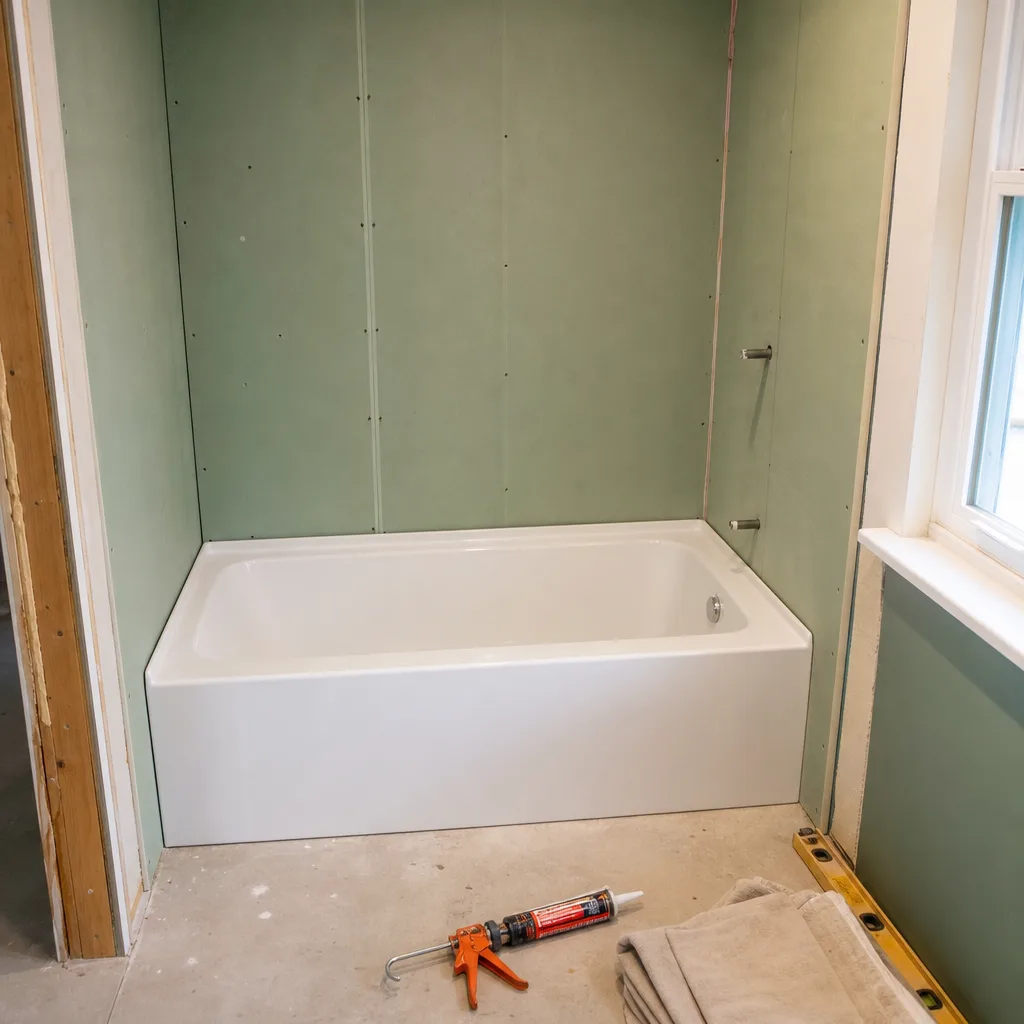
Here’s how the job usually goes, start to finish.
- Measure and plan. The new tub has to fit the space, and it also has to fit through your doors and hallway. A tub that won’t make the turn into the bathroom is a problem you want to catch before it’s delivered.
- Shut off the water and take off the fixtures. The faucet handle, spout, and drain cover come off first.
- Open up the wall at the tub’s edge. A built-in tub has a lip that sits behind the tile or surround, so the bottom of the wall has to come out to free it.
- Disconnect the drain and overflow, then remove the old tub. Steel and acrylic tubs can often come out in one piece. A heavy cast iron tub is sometimes broken into pieces to get it out of the room.
- Check what’s underneath. With the tub gone, the subfloor, the framing, and the drain pipes are out in the open. This is where hidden water damage shows up.
- Set the new tub on solid support. Many tubs need a bed or support under the floor of the tub so it doesn’t flex. Skipping that step is how you end up with the same cracking problem all over again.
- Hook up and test. The drain and overflow get connected, and the tub gets filled and checked for leaks while the wall is still open and you can see everything.
- Close the wall and seal the edges. The wall gets patched and tiled, and the tub gets caulked. The caulk needs time to cure before you use the tub.
Step five is the one that can change the plan. If the subfloor under the old tub is soft or rotted, it has to be fixed before a new tub goes on top. Putting a brand new tub on a bad floor just starts the clock on the next failure.
That’s also why a replacement can grow once the old tub is out. Nobody can see under a tub until it’s gone. A good plumber should tell you up front what happens if they find damage, and how you’ll hear about it before any extra work starts.
Expect your bathroom to be out of use for a few days. The exact time depends on the tub, how much wall comes out, what turns up underneath, and how long the tile and caulk need to set. If it’s your only tub or shower, plan for that ahead of time.
Some tub jobs need a permit, especially when the drain or water lines get moved. Ask whoever does your work whether your job needs one in Norman, and who takes care of it.
Before you book, ask these questions:
- How will the new tub be supported underneath?
- Will you test for leaks before the wall is closed?
- What happens if you find damage under the old tub?
- How much of the wall or tile will come out?
- When can I use the tub again?
Clear, specific answers are a good sign. During your free estimate, we’ll walk you through what your tub replacement will involve, including what could change once the old tub comes out.
Thinking about Bathtub Replacement? Let’s talk.
Call for an estimate. Brandon’s Plumbing is ready to help.
The Risk of Removing a Bathtub Yourself
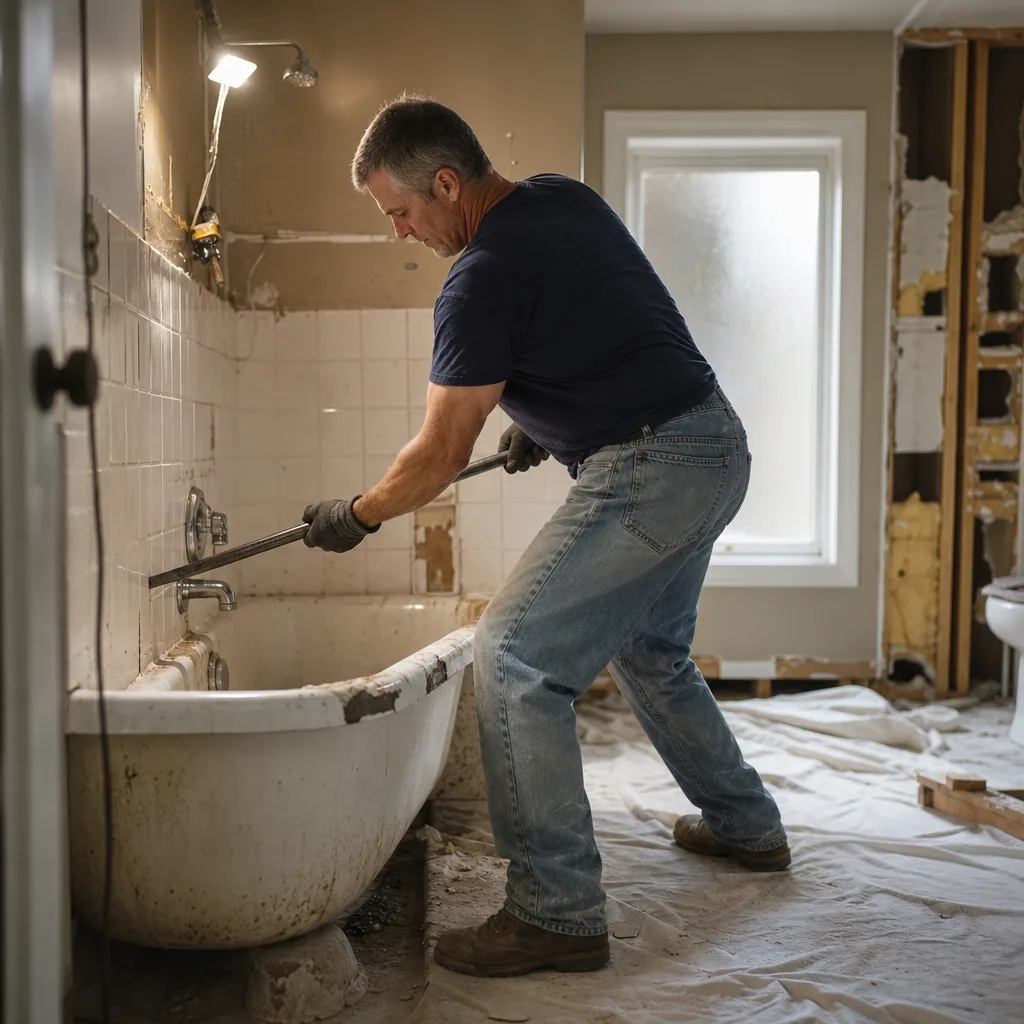
Can you pull out an old tub yourself? Some handy folks do. The hard part isn’t getting the tub out. It’s everything around it that you can’t see until you’re already in the middle of the job.
Here’s where a DIY tear-out tends to go wrong.
- The pipes behind the wall. The valve and water lines sit right behind the tile at the faucet end. One wrong swing with a pry bar or saw can crack a fitting, and now you’ve got a leak inside the wall.
- The drain. The drain and overflow connect under the tub, and on older homes those parts can be brittle or rusted. Force them loose and you may break the pipe below the floor, not just the part you meant to remove.
- The weight. A cast iron tub is heavy enough to hurt you, crack the floor, or gouge the doorway on the way out. Breaking it apart isn’t a quick job either.
- The tile you wanted to keep. It’s easy to take out more wall than you planned. Then a tub swap turns into a full wall redo.
- The water you can’t shut off. If the shutoff valve for the tub or the house is old and stuck, you may not be able to stop a leak fast once something breaks.
Picture it. You get the old tub out on a Saturday and feel pretty good about it. Then you notice the drain pipe below snapped when the tub came free, and the faucet valve is dripping where the wall came off. Now you need a plumber anyway, only with a bigger repair than the one you started with.
There’s also the stuff we covered above. Once the tub’s out, someone has to judge whether the subfloor is solid and set the new tub on proper support. If that part’s done wrong, the cracking starts all over again, no matter who pulled the old tub.
Now for the honest part. You don’t have to hand everything off.
You can clear out the bathroom, pick the tub you want, and decide how much of the tile you’d like to keep. If you’re comfortable with demo work, you can ask us which parts you could do yourself before we come in. We’ll give you a straight answer.
Our team is made up of licensed and bonded plumbers. We’ve been doing this work around Norman and the Oklahoma City area for more than 30 years, and we care about honest pricing and work that holds up. When we pull a tub, we deal with the pipes, the drain, and whatever turns up underneath as part of the same job, so you’re not left with a half-finished bathroom.
If you’re still on the fence, start with a free estimate. We’ll look at your tub, tell you whether it needs a repair or a replacement, and walk you through what the job would involve.
Watch Our Video
See How We Handle Bathtub Replacement in
Brandon’s Plumbing
How Bathtub Replacement Pricing Works
There’s no single price for a bathtub replacement. The cost comes from a few separate pieces: the tub itself, getting the old one out, the plumbing hookup, and putting the wall and floor back together. Once you know what those pieces are, a quote gets a lot easier to read.
Most tub jobs are quoted one of two ways. Some contractors give one price for the whole job. Others charge for time plus materials. Either can be fair. What matters is that you know which one you’re getting and what’s inside it.
Here’s what usually pushes the price up or down:
- The tub you pick. A basic acrylic or fiberglass tub costs less than a cast iron one or a tub with jets. Heavier tubs also take more hands to carry in.
- The tub coming out. A light steel or acrylic tub comes out faster than an old cast iron one that has to be broken apart.
- How much wall comes off. Replacing a few rows of tile costs less than redoing the whole surround.
- Plumbing changes. Hooking a new tub to the same drain is simpler than moving the drain or swapping out an old valve in the wall.
- Where the bathroom is. A tub on a second floor, or one that has to go through tight halls and doorways, takes more time and work.
- What’s under the old tub. If the subfloor needs repair, that’s added work. We covered why that can come up once the tub is out.
- Haul-away and permits. Getting rid of the old tub and any permit for your job in Norman can be separate line items.
A tub swap that keeps the same size, the same drain spot, and most of the tile is about as simple as this job gets. A job that changes the tub size, moves pipes, or redoes the walls is a bigger project. Two quotes can look far apart just because they cover different work.
That’s why the cheapest number isn’t always the cheapest job. A low quote that leaves out wall repair or haul-away can end up costing more by the time it’s done.
Before you sign anything, ask these money questions:
- Is this a set price for the whole job, or is it time and materials?
- Is the new tub included, or do I buy it myself?
- Does the price cover tearing out and hauling away the old tub?
- Does it include patching the wall and redoing the tile, or just setting the tub?
- If extra work comes up, how will it be priced, and will I okay it before you start?
If a quote can’t answer those clearly, ask for it in writing with each part spelled out. You should know what you’re paying for before the first tile comes off.
Honest pricing matters to us. The best way to get a real number for your tub is to have someone look at it, and that’s what our free estimate is for. We’ll check your tub, tell you what the job will involve, and walk you through what’s in the price.
Frequently Asked Questions
Common questions about Bathtub Replacement
Why do so many homeowners decide to get rid of their bathtub?
Most people replace a tub because it no longer fits how they live, not just because it’s damaged. Stepping over a high tub wall gets harder with age, and many families simply use showers more than baths. Others are dealing with a tub that keeps cracking, flexing, or leaking no matter how many times it gets patched. If your tub still feels solid and you just want a different look or easier access, that’s a real reason to replace it too.
Is it cheaper to replace a tub with another tub, or switch to a shower?
It depends on how much of the plumbing and wall has to change, not just which fixture you pick. A straight tub-for-tub swap that keeps the same drain spot and most of the tile is usually the simplest version of this job. Switching to a shower can mean moving the drain, reworking the floor pan, and redoing more of the surround. Either way, ask for a clear breakdown of the tub or shower unit, demo, plumbing changes, and wall work before you compare quotes.