Trusted plumbing experts serving Norman Oklahoma for over 30 years
What’s Covered on This Page
- Check for a Citywide Water Issue First
- Outdoor Plumbing Covers Fixtures and Lines, Not Sprinklers
- Signs an Outdoor Leak Needs a Plumber Now
- What Happens During an Outdoor Repair Visit
- Why Freeze Season Raises the Risk for Hose Bibs and Exterior Pipes
- Can a city-wide water outage affect only part of my street?
- Why is my water cloudy after a city repair finishes?
- Who do I call if a neighbor wants to dig near my yard for their own plumbing repair?
Check for a Citywide Water Issue First
Here’s something we’d tell any neighbor. Don’t pay for a repair until you know the problem is yours.
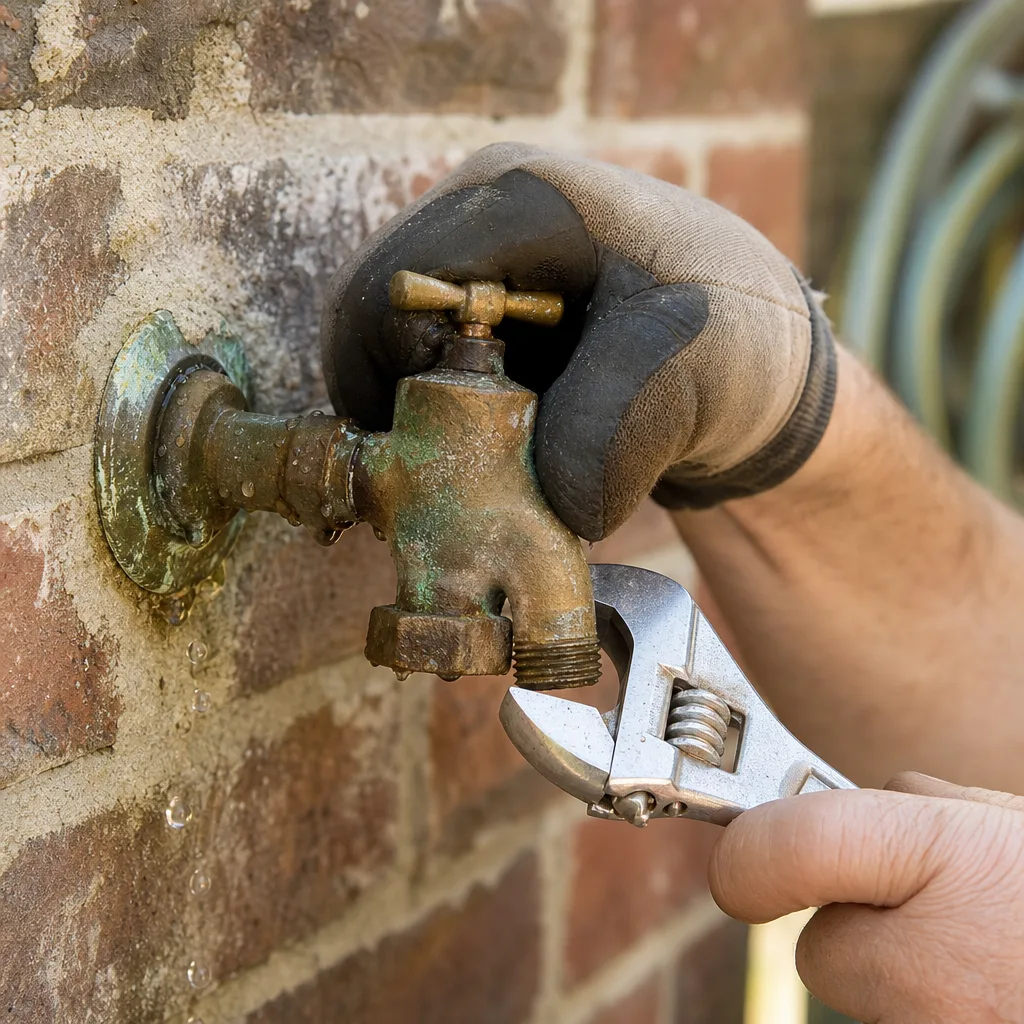
Sometimes your hose spigot sputters or your sprinklers barely mist because of a problem out in the street. A main break, a repair crew working on a nearby line, or a pressure drop across part of town can all look like a broken outdoor pipe at first.
These quick checks can save you a service call.
- Turn on a faucet inside. If your kitchen sink is weak too, the problem probably isn’t just your outdoor lines.
- Ask a next-door neighbor. If their water is low or off, it’s likely a city issue, not yours.
- Look up and down your street. Water bubbling up through the pavement or a city truck with crews digging is a strong clue.
- Check the City of Norman’s website or social media pages for water alerts, boil orders, or planned work in your area.
If any of those point to the city, wait it out. Report what you’re seeing to the city’s utilities department so they know about it. Once their work is done, your outdoor water should come back on its own.
One heads-up for after a city repair. It’s common to see cloudy water or a little sputtering when the water first comes back, because air gets trapped in the lines. Run an outdoor spigot for a few minutes and it usually clears up. That’s not a sign your pipes are damaged.
Now, what if your neighbors are fine and it’s just you?
That’s when your water meter helps. In most homes, the meter is roughly where the city’s responsibility stops and yours begins. Pipes on the street side are generally theirs. Pipes running from the meter to your house, your spigots, and your sprinkler lines are generally yours.
Try this simple test. Shut off every faucet, hose, and sprinkler at your house. Then find your meter box, usually near the curb, and lift the lid. Watch the dial or the small leak indicator for a few minutes.
- If it’s still moving with everything off, water is going somewhere on your property. That points to a leak you’ll want looked at.
- If it’s perfectly still and you’ve still got weak water at one spigot, the problem may be that fixture or the short line feeding it.
Be careful in the meter box. Spiders and wasps like to hide in there, so take a look before you reach in.
If the checks point to your side, you haven’t wasted any time. You now know exactly what to tell us, and that makes the rest of the job quicker and simpler.
Outdoor Plumbing Covers Fixtures and Lines, Not Sprinklers
Once you know the problem is on your side of the meter, the next question is simple. Is this a plumbing job or a sprinkler job? Those are two different trades, and calling the right one first saves you time and money.
Outdoor plumbing is the water and drain system that runs outside your house. It’s built like the plumbing inside, just out in the weather. Here’s what falls under it:
- Hose spigots, also called hose bibs or outdoor faucets, that drip, won’t shut off, or split after a freeze
- The pipe inside the wall behind a spigot, where a cracked line can leak into your house
- Buried water lines running across your yard to a shop, detached garage, or outdoor sink
- Leaks in the main supply line between your meter and your house
- Outdoor drain lines and sewer cleanouts that back up or overflow in the yard
If your problem is on that list, you’re in the right place. We handle leak detection, pipe repair, line repair and replacement, and sewer line repair, so we can trace a hidden outdoor leak and fix the pipe that’s causing it.
Sprinkler systems are a different story. Sprinkler heads, zone valves, timers, controllers, and the thin lines that feed each zone are irrigation work. They usually belong to an irrigation or landscape company that works on those systems every day.
We’d rather tell you that up front than send someone out for a broken sprinkler head. If one zone won’t come on, a head is spraying the sidewalk, or your timer has gone haywire, a sprinkler company is your best first call.
There’s one gray area worth knowing about. Your sprinkler system gets its water from your home’s supply line. If the leak is at that tie-in point or on the main line feeding it, it may be a plumbing problem, not a sprinkler problem.
A couple of clues can help you sort it out:
- If the yard stays soggy even when the sprinklers are off, the leak may be on a supply line. That leans toward plumbing.
- If water only shows up when a certain zone runs, the problem is likely in that zone. That leans toward the sprinkler company.
- If a spigot on the side of the house is dripping or spraying, that’s plumbing, even if a hose to your garden is attached to it.
Winter makes this sorting even more important. Oklahoma gets hard freezes, and a spigot that froze with a hose still attached can crack inside the wall. You might not see a leak until spring, when you turn it on and find water in the crawlspace or behind the siding. That’s a plumbing repair, and it’s worth catching early.
Not sure which side your problem is on? Tell us what you’re seeing when you call. If it sounds like a sprinkler issue, we’ll say so. If it’s ours, we’ll come take a look and give you a free estimate first.
Signs an Outdoor Leak Needs a Plumber Now
Not every outdoor leak is an emergency. Some can wait a few days. Others will cost you more every hour you leave them alone. The trick is knowing which one you’ve got.
Here’s how we’d sort it out if you asked us over the fence.
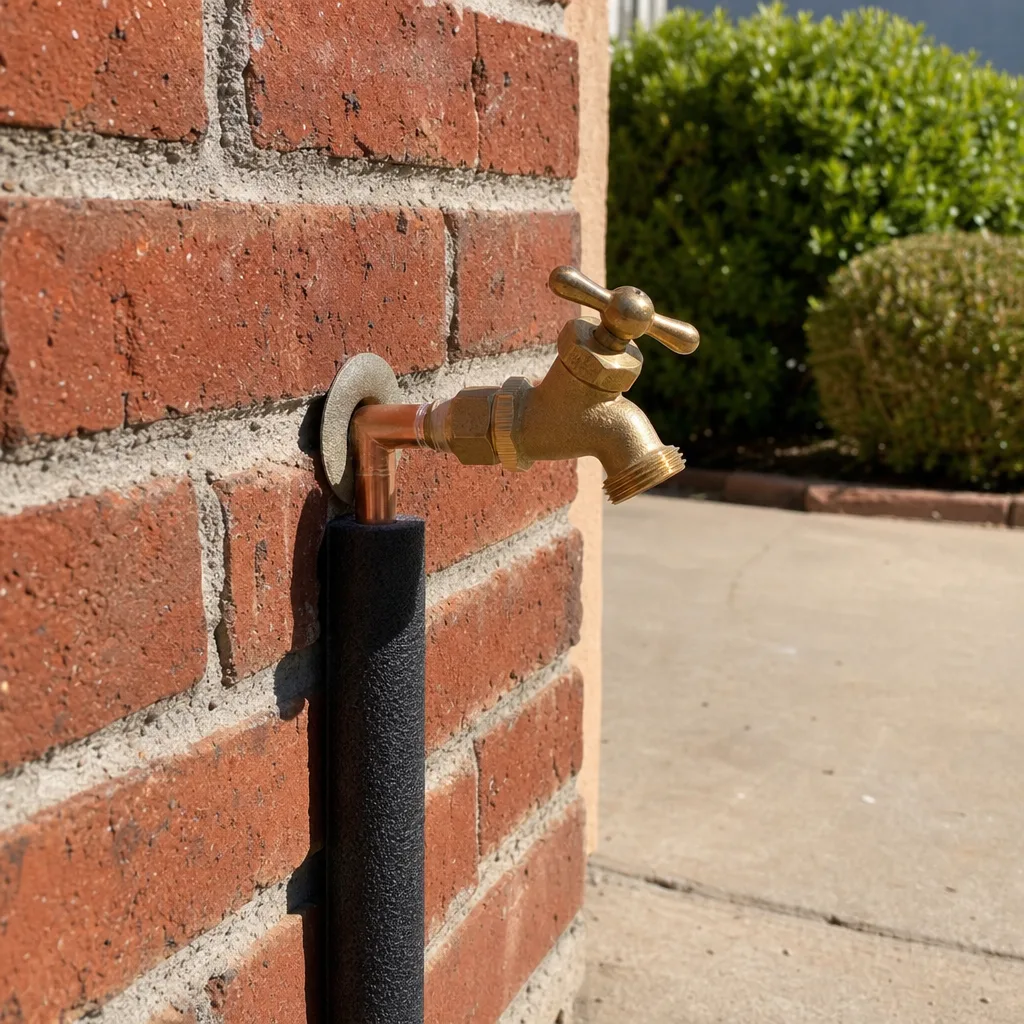
Call a plumber right away if you notice any of these:
- Water is running toward your foundation, pooling against the house, or showing up in your crawlspace.
- A spigot won’t shut off or is spraying, and turning the handle doesn’t stop it.
- A patch of yard stays soaked or keeps getting bigger, even on dry days with the sprinklers off.
- The ground has sunk, gone soft, or opened into a small hole over where a water line runs.
- You hear hissing or running water outside when nothing in the house is on.
- Your water pressure dropped all over the house at the same time a wet spot showed up outside.
- A sewer cleanout in the yard is overflowing, or you smell sewage outside.
Each of these means a lot of water is going somewhere it shouldn’t. That’s when damage moves fast.
Water against a foundation can soak into the ground under your house. Water in a crawlspace can lead to rot and mold. A sunken spot in the yard can mean water has been washing soil away for a while. None of that gets cheaper by waiting.
A sewage backup is its own kind of urgent. It’s messy and it’s a health concern. Keep kids and pets away from the area until it’s fixed.
If the meter test from earlier showed the dial spinning fast, treat that as urgent too. A slow creep is one thing. A dial that’s moving fast means a lot of water is getting away.
A surprise jump in your water bill is another clue. If you haven’t been filling a pool or watering more than usual, a hidden leak may be the reason.
Now for the honest part. Some outdoor leaks really can wait.
A spigot that drips a little from the spout or around the handle when it’s off is annoying, but it’s not an emergency. The same goes for a small drip at a hose connection. Those are fine to book for a normal weekday visit.
A hose that leaks where it screws on is usually just a worn washer in the hose. You can swap that yourself for very little money.
If the drip is outside and steady but small, put a bucket under it and give us a call during regular hours. We’ll set up a time that works for you.
The one exception is a spigot that dripped after a freeze. As we covered above, that crack can be leaking inside the wall where you can’t see it. If you spot water on the inside of that wall or in the crawlspace, bump it to the urgent list.
When it is urgent, you don’t have to wait for morning. We offer 24/7 emergency service for burst pipes, leaks, and other urgent problems. Our plumbers are licensed and bonded, and we’ll give you a free quote before any work starts.
Have questions? We’re happy to help.
Call for an estimate. Brandon’s Plumbing is ready to help.
What Happens During an Outdoor Repair Visit
Knowing what to expect takes a lot of the worry out of a repair. Most outdoor plumbing repairs follow the same basic steps, whether it’s one leaky spigot or a line buried under the yard.
- Find the source. A dripping spigot is easy to spot. A leak in a buried line isn’t. Pinning down exactly where the water is coming from comes first, so nobody digs up more yard than they need to.
- Figure out why it failed. A spigot that split in a freeze, a fitting that’s simply worn out, and a pipe cracked by roots or shifting soil all need different fixes.
- Go over your options and the price. You should hear what’s wrong, what it’ll take to fix, and what it’ll cost before any work begins. With us, that’s a free estimate.
- Shut off the water and make the repair.
- Turn the water back on and test it. A good repair gets checked for drips and pressure before anyone calls it done.
What the repair looks like depends on what broke.
A worn-out spigot is often a quick swap. If yours has frozen before, ask about a frost-free spigot. It shuts the water off farther inside the wall, where it’s less likely to freeze.
A cracked pipe behind the spigot may need to be reached from inside, usually through the crawlspace or an opening in the wall. That’s more work than the spigot itself, but it’s the part that matters.
A buried line usually means some digging. Depending on the damage, the fix might be patching one bad section or replacing the whole run. If the trouble is a yard drain or sewer cleanout, that falls under our sewer line repair work.
Several things push the cost of a buried line repair up or down. How deep the pipe sits, how long the damaged stretch is, and what’s on top of it all play a part. A line under open grass is simpler to reach than one under a driveway, a patio, or a well-loved flower bed.
Before you agree to anything, these are fair questions to ask:
- What caused this, and could it happen again?
- Is a repair enough, or does replacing it make more sense?
- Will you need to dig, and how will the yard be left afterward?
You can make the visit quicker with a few easy steps:
- Find your main water shutoff if you can, so it’s easy to show us.
- Unlock the gate and put pets inside.
- Clear a path to the problem spot and to your crawlspace door.
- Move anything stored against the wall behind a leaky spigot.
- Jot down when you first noticed the problem and what your meter test showed.
That last one helps more than you’d think. Small details, like water only showing up after a freeze, point straight to the cause.
Our plumbers are licensed and bonded, and you’ll know the plan and the price before we start. No surprises on your water bill or ours.
Watch Our Video
See How We Handle Outdoor plumbing system repair in
Brandon’s Plumbing
Why Freeze Season Raises the Risk for Hose Bibs and Exterior Pipes
Cold weather is hard on anything outside that holds water. When water freezes, it expands. Inside a pipe, it has nowhere to go, so the pressure builds until something gives.
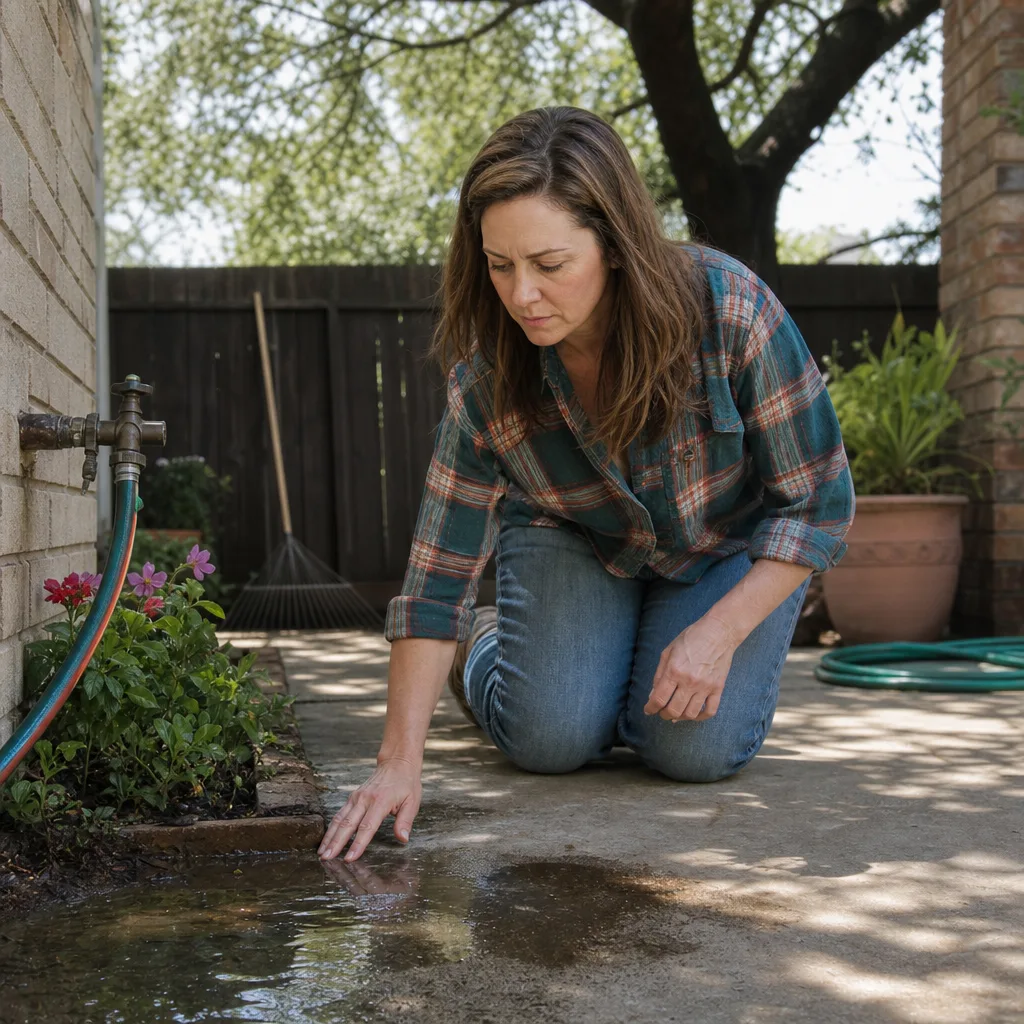
Hose bibs take the worst of it. They stick right out through your outside wall, so the metal and the water inside sit in the open air. The pipe just behind them often runs through a cold wall or crawlspace with little or no insulation.
Here’s the part most folks don’t expect. The pipe often doesn’t split right where the ice forms. The ice plugs the line, and pressure builds in the trapped water between the ice and the closed valve. That’s why the crack can end up a foot or two inside the wall, where you can’t see it.
Norman winters add their own twist. A mild, sunny afternoon can turn into a hard freeze by the next morning. Those quick swings catch a lot of people with hoses still hooked up and outdoor lines still full of water.
Hose bibs aren’t the only pipes at risk. Keep an eye on these spots too:
- Pipes in the crawlspace, especially near vents or the access door
- Water lines running along an outside wall, through a garage, or into an unheated shop
- Any exposed pipe where a water line comes up out of the ground
- Outdoor sinks and shop lines that sit unused all winter
A little prep before the first hard freeze goes a long way. Here’s what we’d tell a neighbor to do:
- Unhook every garden hose and drain it before you store it.
- If your spigot has a shutoff valve inside the house, close it. Then open the outdoor spigot so the leftover water drains out, and leave it open.
- Put a foam faucet cover over each hose bib. They’re cheap at any hardware store.
- Wrap exposed pipes in the crawlspace or garage with foam pipe insulation.
- Close your crawlspace vents for the winter and make sure the access door shuts tight.
If a spigot has frozen on you before, that’s a good sign it’s time to ask about the frost-free kind we mentioned earlier.
After a cold snap, be a little careful the first time you turn an outdoor spigot back on. Have someone inside check the wall behind it, or peek into the crawlspace, while the water runs. If they see water where it shouldn’t be, shut the spigot off right away.
Water inside the wall means the pipe behind the spigot has likely cracked. That’s a pipe repair, not just a new faucet, and it’s best handled before it soaks your wall or floor.
Our team handles leak detection and pipe repair, so we can find exactly where a freeze did its damage and fix the line that broke. You’ll get a free estimate before we begin.
Frequently Asked Questions
Common questions about Outdoor plumbing system repair
Can a city-wide water outage affect only part of my street?
Yes, a city water issue can hit some houses and not others. Norman residents have reported losing water suddenly while a nearby relative in another neighborhood had the same problem at the same time. That pattern usually points to the city’s system, not your outdoor plumbing, so check with a neighbor before you assume the leak is yours.
Why is my water cloudy after a city repair finishes?
Cloudy or sputtering water after a city repair is usually just trapped air, not a sign of damage to your pipes. Once Norman announces repairs are finished and water is back on, run an outdoor spigot for a few minutes and it should clear up on its own.
Who do I call if a neighbor wants to dig near my yard for their own plumbing repair?
You have the right to say no if a neighbor’s plumbing contractor wants to dig on your property without your permission. Buried outdoor lines can run close to property lines, so always ask to see where they plan to dig and confirm it stays on their side before any work starts.